
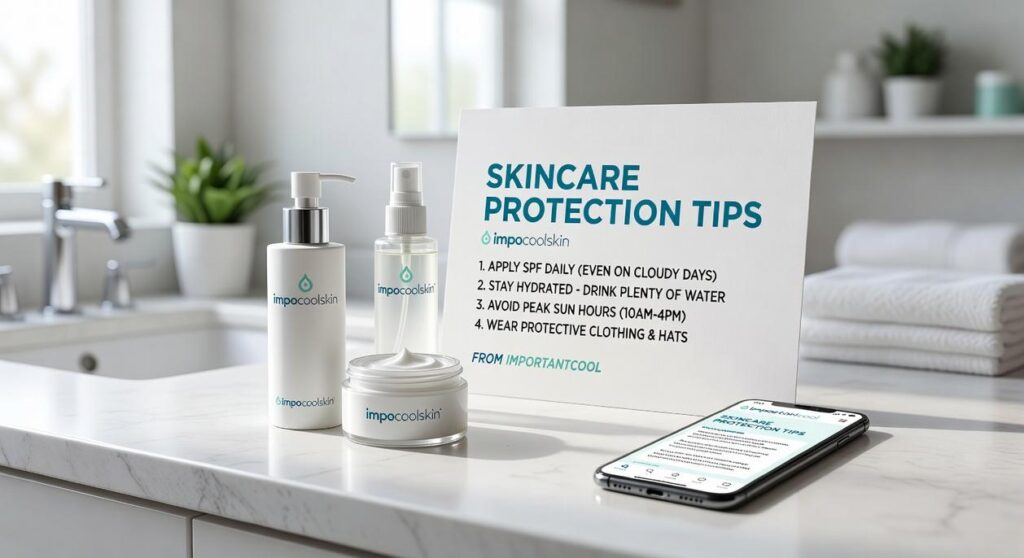
Your skin takes a beating every single day.
You’re probably here because you’ve tried the usual skincare advice and still deal with irritation, dullness, or signs of aging that seem to appear out of nowhere. I get it. Most protection tips barely scratch the surface.
Here’s what I know: your skin faces more threats now than it did even a decade ago. Pollution levels are higher. UV exposure is more intense. And most people are using products that don’t actually protect against what matters.
I’ve spent years studying how skin responds to environmental stress. Not just what products claim to do. What actually works at a biological level.
This guide breaks down a real defense plan for your skin. I’ll show you how to protect against the aggressors that cause premature aging and damage.
We base everything at Impocoolskin on skin biology and proven science. That means you’re getting Impocoolskin skincare protection tips from Importantcool that work with how your skin actually functions, not marketing promises.
You’ll learn which threats to prioritize, which products actually deliver protection, and how to build a routine that keeps your skin healthy long term.
No miracle cures. Just a clear strategy that works.
The Foundational Shield: Mastering Daily Sun Protection
Have you ever wondered why your sunscreen says “broad-spectrum” on the bottle?
Most people haven’t. They just grab whatever’s on sale and call it a day.
But here’s what that label actually means for your skin.
UVA rays age you. They penetrate deep into your skin and break down collagen. Think wrinkles and dark spots that show up years later.
UVB rays burn you. These are the ones that turn you red at the beach.
Some people say you only need to worry about UVB protection because that’s what causes visible damage. They figure if they’re not burning, they’re fine.
But that’s missing half the picture.
UVA rays work quietly. You won’t see the damage today or even next month. But in five years? Ten years? You’ll see it. And by then, you can’t undo it.
That’s why broad-spectrum matters. It blocks both types.
Now let’s talk about SPF numbers because there’s a lot of confusion here.
SPF 30 blocks about 97% of UVB rays. SPF 50 blocks about 98%. (The Skin Cancer Foundation confirms this, by the way.)
Wait, so SPF 50 is only 1% better?
Pretty much. The jump from 30 to 50 isn’t as big as the numbers suggest. But here’s the catch. Most of us don’t apply enough sunscreen in the first place, so that extra percentage can help cover our mistakes.
Speaking of application, do you know the two-finger rule?
Squeeze sunscreen down the length of your index and middle fingers. That’s roughly how much you need for your face and neck. Sounds like a lot, right? It is. And most people use about half that amount.
When you skimp on sunscreen, SPF 50 becomes more like SPF 25 in real-world protection.
You also need to reapply. I know, I know. Nobody wants to hear that.
But sunscreen breaks down. After two hours in the sun, you need more. After swimming or sweating hard, you need more. This isn’t optional if you want the protection you paid for.
Here’s the part that surprises people most.
You need sunscreen every single day. Even when it’s cloudy. Even in winter. Even when you’re just sitting by a window at work.
UVA rays go through clouds and glass. They don’t care about the weather forecast.
I’ve worked with impocoolskin on skincare protection strategies, and the data is clear. Daily sunscreen users show measurably less skin aging over time compared to people who only wear it at the beach.
Your morning routine should include sunscreen the same way it includes brushing your teeth. Not because you’re going somewhere special. Just because it’s morning.
Does this sound like overkill?
Maybe. But your skin in twenty years will thank you for being a little obsessive now.
Fortifying Your Defenses: The Skin Barrier and Moisture Lock
Ever notice how your skin feels tight after washing your face?
That’s not clean. That’s stripped.
Your skin has a natural defense system called the stratum corneum. Think of it as your body’s security team. It keeps the bad stuff out (pollutants, bacteria) and the good stuff in (moisture).
When this barrier works right, your skin stays balanced. When it doesn’t, everything falls apart.
What is the Skin Barrier?
The stratum corneum sits on your skin’s outermost layer. It’s made of dead skin cells held together by natural oils and lipids. Sounds gross, but it’s what keeps your skin healthy.
This barrier blocks environmental damage while preventing water from escaping. When it’s compromised, you get dryness, sensitivity, and yes, even breakouts.
The Dangers of Over-Cleansing
Here’s where most people mess up.
You think scrubbing harder means cleaner skin. But harsh cleansers and excessive washing strip away those natural oils your barrier needs. What happens next? Your skin overcompensates by producing more oil (hello, breakouts) or it just gives up and becomes dry and irritated.
Sound familiar?
I see this all the time. People use strong cleansers twice a day, wondering why their skin feels worse instead of better.
Protective Cleansing
You need a pH-balanced cleanser. Your skin sits around 5.5 on the pH scale. Anything too alkaline throws that off.
Go gentle. Use lukewarm water, not hot. Hot water feels good but it damages your barrier faster than anything else.
Following impocoolskin skincare protection tips from importantcool can help you choose products that actually support your barrier instead of breaking it down.
Locking in Moisture
Cleansing is only half the battle.
After you wash, your skin needs moisture sealed back in. That’s where moisturizers come in with three key players: humectants (they draw water in), emollients (they smooth and soften), and occlusives (they lock everything down).
Skip this step and you’ve just wasted your time cleansing properly.
Your barrier repairs itself overnight, but only if you give it what it needs.
The Environmental Guard: Neutralizing Free Radical Damage
Your skin faces attacks you can’t even see.
Every time you step outside, free radicals from pollution and UV rays start breaking down your collagen. Blue light from your phone does the same thing (yes, even indoors).
Most skincare articles tell you to just wear sunscreen and call it a day. They say antioxidants are nice to have but not really necessary. That if you eat healthy, your skin will be fine.
Here’s where they’re wrong.
Sunscreen blocks UV rays. But it doesn’t stop the oxidative stress that’s already happening at a cellular level. And eating berries? Great for your body, but those nutrients get distributed everywhere before your skin sees much benefit.
What free radicals actually do
Think of free radicals as unstable molecules that steal electrons from your healthy skin cells. This process, called oxidative stress, triggers collagen breakdown and speeds up aging.
The sources are everywhere. Car exhaust. Cigarette smoke. That afternoon sun hitting your face through the window.
Why antioxidants matter
Antioxidants neutralize free radicals before they can damage your cells. They donate electrons without becoming unstable themselves (which is the whole point).
But timing matters. So does the type you use.
Here’s what actually works:
-
Morning protection – Apply Vitamin C serum before sunscreen. Vitamin C works with SPF to give you better defense against UV damage than either one alone.
-
Evening repair – Use Vitamin E or Resveratrol at night when your skin goes into recovery mode. These antioxidants help repair the damage from the day.
-
Internal support – Eat antioxidant-rich foods like blueberries, spinach, and almonds. Your body needs these nutrients to support skin health from within.
What most people miss is the connection between topical and internal antioxidants. You need both. Your skincare routine impocoolskin should include serums that deliver antioxidants directly to your skin while your diet provides the raw materials for cellular repair.
I’ve seen people spend hundreds on creams but skip the Vitamin C serum. Or they take supplements but never apply topical antioxidants.
Both approaches leave gaps in your defense.
The real impocoolskin skincare protection tips from importantcool come down to this: layer your protection and make it consistent.
Internal Protection: The Diet, Hydration, and Skin Health Axis
Your skin shows what you eat.
I’m not being dramatic here. What goes into your body directly affects how well your skin protects you. It’s that simple.
Think about it this way. You can slather on the best creams and serums (and I’m not saying you shouldn’t). But if you’re not feeding your skin from the inside? You’re only doing half the job.
Some dermatologists will tell you diet doesn’t matter much. That genetics and topical treatments are what really count. They’ll point to studies that show mixed results.
But here’s what they overlook.
Your skin cells need specific nutrients to rebuild and protect themselves. Without those nutrients, even the best skincare routine falls short.
Omega-3 fatty acids keep your cell membranes strong and flexible. Vitamin A speeds up cell turnover so damaged skin gets replaced faster. Zinc helps wounds heal and keeps inflammation in check.
You can get these from supplements or you can get them from food. Fatty fish versus flaxseed oil. Sweet potatoes versus retinol pills. Both work, but whole foods give you other benefits too.
Now let’s talk about water.
When you’re properly hydrated, your skin stays plump and elastic. It functions better as a barrier. When you’re dehydrated? That barrier weakens and everything from pollution to bacteria has an easier time getting through.
I drink about eight glasses a day. Some people need more, some need less. You’ll know you’re getting enough when your skin bounces back quickly after you pinch it.
Here’s where it gets tricky though.
High-glycemic foods (white bread, candy, most processed snacks) spike your blood sugar fast. That triggers inflammation throughout your body, including your skin. For impocoolskin derm care, this means breakouts, redness, and a weakened defense system.
I’m not saying never eat sugar. I’m saying be aware of what it does.
The choice is yours: feed your skin what it needs or deal with the consequences.
The Recovery Protocol: Protecting Skin Through Rest and Stress Management
You already know sleep matters.
But do you know what actually happens to your skin while you’re out cold?
During deep sleep, your body cranks up blood flow to your skin. It starts rebuilding collagen. This isn’t just recovery time. It’s when your skin does most of its repair work.
Skip sleep and you’re skipping protection.
Now here’s where it gets interesting. Stress isn’t just in your head. When you’re stressed, your cortisol levels spike. That cortisol breaks down the collagen your skin needs and kicks off inflammatory responses that show up on your face.
So what can you do about it?
Start small. Try deep breathing for two minutes when you feel tension building. Take a short walk around the block. These aren’t impocoolskin skincare protection tips from importantcool that require an overhaul of your life.
They’re quick moves that actually work.
And once you get your stress under control and your sleep dialed in, you might be wondering what comes next. Should you adjust your skincare routine to match? Do certain products work better when you’re well-rested?
Those are smart questions to ask.
A 360-Degree Approach to Lifelong Skin Health
You now have a complete toolkit of impocoolskin skincare protection tips that go beyond the surface.
I know protecting your skin from constant environmental assault can feel overwhelming. The pollution, the UV rays, the stress, the lack of sleep. It all adds up and your skin shows it.
But here’s what I’ve learned: a consistent, multi-layered approach works. When you combine topical products with the right diet and lifestyle habits, you build real defense. Not just temporary fixes.
Your skin is resilient when you give it what it needs.
This week, choose one new protective habit from this guide. Just one. Maybe it’s adding an antioxidant serum to your morning routine. Or drinking more water throughout the day. Or committing to that evening skincare ritual you keep skipping.
Start small but start now.
The difference between skin that struggles and skin that thrives often comes down to consistency. You don’t need to overhaul everything at once (that usually backfires anyway).
Pick your habit. Build from there. Your skin will thank you.