
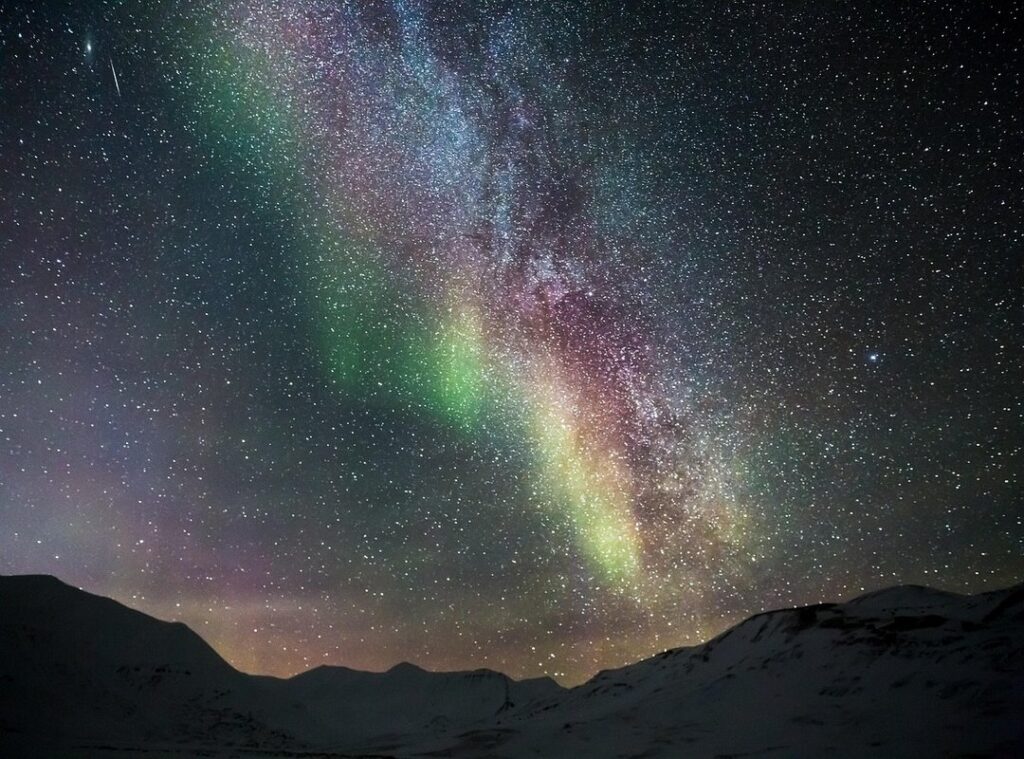
The Northern Lights captivate many but remain a mystery to most. I get it. You see those stunning colors dancing across the sky and wonder what’s going on.
Why do they happen? What causes them? There’s a lot of confusion out there, and I want to clear that up.
I’ve spent years studying natural phenomena. I’m passionate about bringing clarity to the beauty of our world. This isn’t just a science lesson; it’s about unlocking a deeper appreciation for one of nature’s greatest wonders.
In this article, I will break down the northern lights cause into simple terms. You’ll find that understanding the science isn’t just for experts.
I aim to turn your confusion into confidence. By the end, you’ll be ready to watch the lights with a new perspective, and hopefully, it inspires your next adventure under the stars.
Northern Lights: Nature’s Dazzling Light Show
Let’s talk about those mesmerizing streaks in the sky. The Northern Lights, or Aurora Borealis, have captivated us for centuries. But what actually causes this celestial spectacle?
The answer lies with the sun.
Our sun is no gentle giant. It’s constantly spewing out a stream of charged particles, known as solar wind. These particles race through space at incredible speeds.
Occasionally, the sun throws a tantrum, releasing coronal mass ejections (CMEs). These are intense bursts of solar material that can really amp up aurora activity.
Now, Earth isn’t defenseless. We’ve got a magnetic field that acts like a shield, guiding these charged particles toward the poles. Imagine it as Earth’s invisible force field, working overtime to protect us.
When these solar particles collide with gases in the upper atmosphere, that’s when the magic happens.
Here’s where it gets technical, but hang with me. The particles excite atoms in the thermosphere, causing them to jump to a higher energy state. When they calm down (de-excite), they release photons.
That’s light, folks! The color of the lights depends on the type of gas involved. Oxygen gives us green and red hues, while nitrogen paints the sky in purples and blues.
So, the northern lights cause is a wild dance of physics and nature. Next time you see them, you’ll know it’s a cosmic performance involving the sun, Earth, and a bit of atomic excitement. Pretty cool, right?
The Cosmic Canvas: How Solar Particles Paint the Sky with Light
Ever wondered what causes the northern lights? It’s a cosmic dance of solar particles colliding with Earth’s atmosphere. Here’s the scoop: charged electrons and protons from the sun slam into atmospheric atoms and molecules.
This isn’t just a science lesson; it’s nature’s fireworks show.
Now, when these collisions happen, atoms get excited. Literally. They absorb energy, and their electrons jump to higher energy levels. (Exciting, right?) But what goes up must come down.
As the electrons return to their original levels, they emit energy as light. That’s how we get those stunning auroras (little) bursts of photons lighting up the sky.
Different gases in the atmosphere produce various colors. Oxygen is the star of the show, gifting us with the more common green auroras at lower altitudes and rarer red ones higher up. Nitrogen, not to be outdone, brings us blue and violet hues, often seen at the aurora’s lower edges or during intense displays.
And don’t forget, altitude in this. The higher the altitude, the more the colors shift. It’s like the universe’s way of playing with a painter’s palette (the) science behind tree communication has its own magic, but this is a whole other level.
Speaking of magic, interested in how trees communicate? Check out this topic for more on that wonder.
Chasing the Aurora: A Dazzling Dance in the Sky
I remember the first time I saw the northern lights. It was a cold night in Norway, and I was standing there, freezing my toes off, but totally mesmerized. The best place to witness this spectacle?
The Aurora Oval, which wraps around the geomagnetic poles like a cosmic belt.
If you’re serious about catching the aurora, head to Scandinavia. Norway, Sweden, and Finland are prime spots. Iceland’s another gem.
Its rugged beauty is the perfect backdrop. Canada’s Yukon, Northwest Territories, and Alaska offer some of the most stunning views, and let’s not forget Greenland, which is often overlooked.
But timing is everything. Late autumn to early spring is ideal. That’s when nights stretch longest, from September to April.
The best hours? Between 10 PM and 2 AM. Though honestly, the lights have their own schedule.
A clear, dark sky is key. City lights will ruin the experience, trust me.
Solar activity plays a big role too. The 11-year solar cycle affects the intensity. You’ll want to check the Kp-index for geomagnetic activity forecasts.
It’s all about understanding the northern lights cause.
Pro tip: Bundle up and bring a thermos of something warm. You’ll thank me when the cold starts biting. So, are you ready to chase the aurora?
Planning Your Aurora Adventure: Important Tips for Observers
So you’re dreaming of the northern lights. Who isn’t? First thing: check the weather.
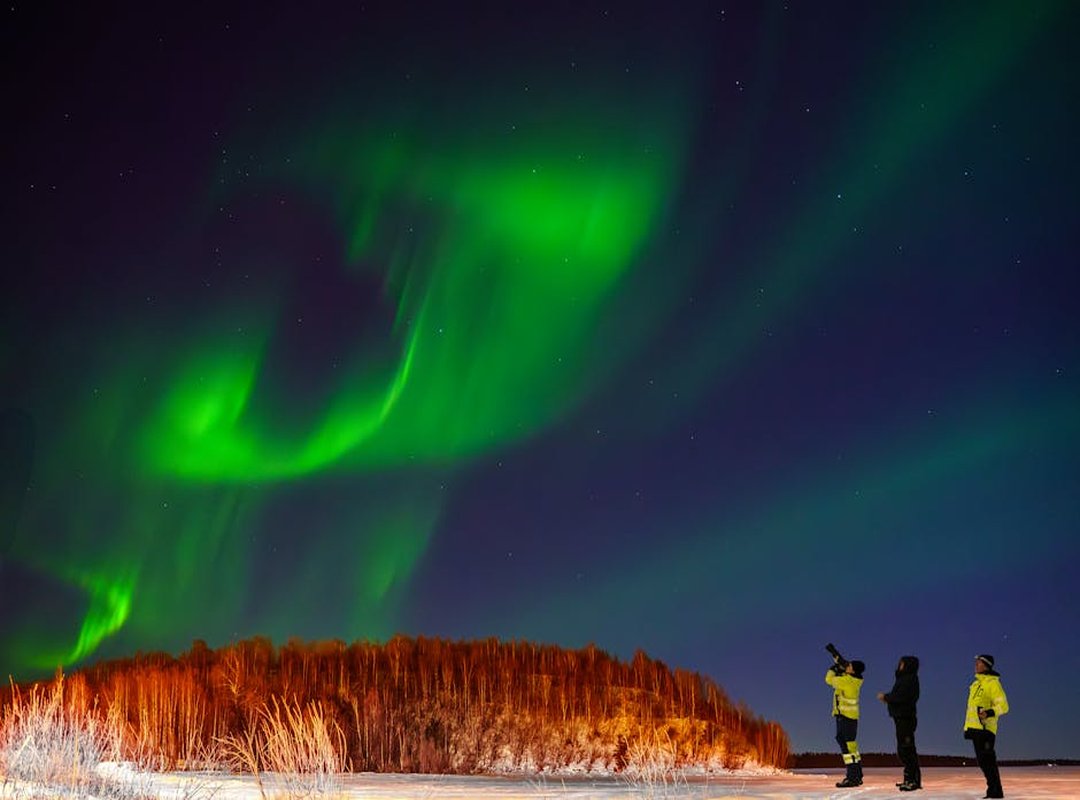
Clouds are your enemy here. You need clear skies to see the lights dance. And don’t forget about the moon.
A new moon or a crescent moon gives you the darkest skies. That’s when the magic happens.
Now, let’s talk aurora forecasts. Use reputable apps. NOAA’s Space Weather Prediction Center is solid for Kp-index predictions.
Trust me, this can save you from a wasted trip. Also, gear up for the cold. Layering is a must.
Cold nights can be brutal.
Got a camera? Great. Bring a tripod and a wide-angle lens.
Long exposure settings like ISO, aperture, and shutter speed are key. And extra batteries. The cold drains them faster than you think.
But patience is your best friend. The aurora is unpredictable. You might wait hours.
Be flexible with your plans. And don’t forget safety. Tell someone your plans, stay on marked paths, and bring a headlamp with a red light setting.
Safety first, folks.
Why do the northern lights cause such awe? It’s simple. They’re a natural wonder.
So be prepared, stay safe, and enjoy the show.
Beyond the Glow: Myths and Truths Unveiled
Ever heard that auroras make noise? They don’t. Well, maybe in a dream.
Scientific consensus says otherwise. Another myth: they’re always green. Sure, green is common, but imagine seeing red, blue, or violet swirling.
It’s mesmerizing, especially during strong displays. Did you know other planets have them too? Jupiter, Saturn, anyone?
These displays even have cultural significance, often seen as omens or spirits in various cultures. And those particles? They race toward Earth, but the light just happens instantly.
Curious about more natural wonders? You might want to learn more.
Discover the Magic of the Night Sky
I hope your curiosity about the northern lights cause has been satisfied. You now understand their beauty and the science behind them.
That initial confusion? It’s gone.
With this knowledge, you can appreciate the aurora more deeply.
I encourage you to plan a trip to see them in person or just gaze up at the night sky with fresh eyes.
The wonders of nature await you.
Explore further. Dive into outdoor phenomena and techniques.
Your adventure starts now.
So why wait? Get out there and experience it for yourself. You won’t regret it.